
Struggling to stay profitable while keeping prices low? In a highly competitive market, many businesses face the challenge of offering affordable products without sacrificing their bottom line. The pressure to cut costs while staying ahead of rivals can feel like a constant uphill battle.
That’s where the cost leadership strategy comes in.
It’s a smart, proven approach that helps companies become the lowest-cost producers in their industry—giving them the edge to offer better pricing or enjoy higher profit margins. Brands like Walmart and McDonald’s have mastered this strategy to dominate their markets.
In this guide, we’ll break down what cost leadership really means, share real-world examples, and highlight the key benefits that can transform your business strategy.
What Is Cost Leadership?
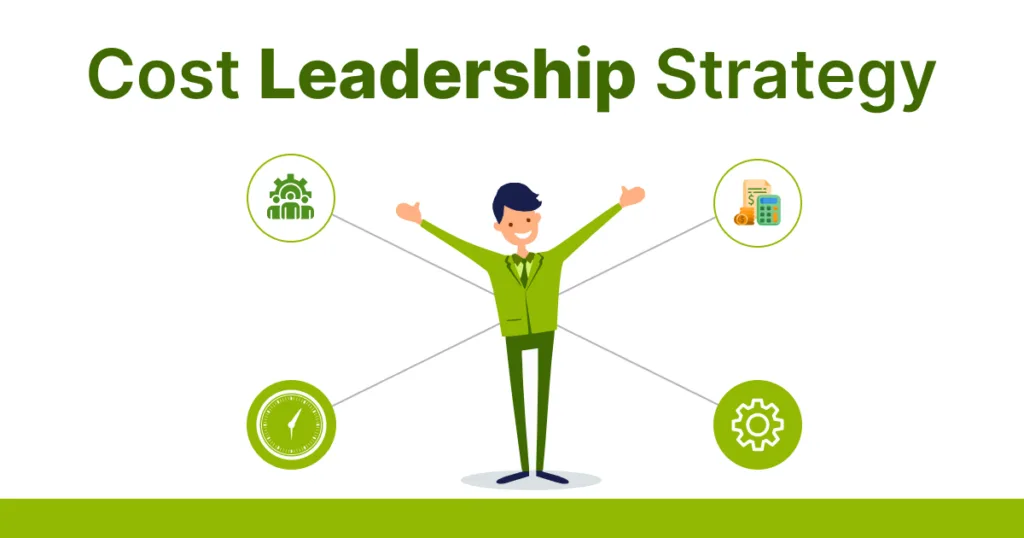
Cost leadership is a business strategy in which a company aims to be the lowest-cost producer, focusing on achieving cost advantages over competitors. This strategy emphasizes lowering manufacturing and operational costs through lean processes and creative cost-cutting strategies.
Lowering expenses enables the company to offer its products or services at a competitive price, appealing to a broad customer base. This attracts price-sensitive customers and increases market share. Cost leadership tries to give the best value at the lowest feasible cost, unlike other strategies that focus on product differentiation or premium pricing.
Companies such as Walmart—the most famous cost leader—McDonald’s, and IKEA are well-known for successfully executing cost leadership. They use large-scale operations and cost-effective manufacturing methods to keep prices down while being profitable. These companies regularly conduct cost analysis and identify key cost drivers to continually reduce costs and maintain their cost advantages. However, maintaining cost effectiveness while preserving product quality and innovation needs ongoing feedback and information.
Also Read:- Digitalization Strategy
Key Elements of Cost Leadership
Cost leadership strategy involves several foundational elements that empower companies to consistently outperform competitors on price while maintaining profitability. At its core, cost leadership focuses on reducing operational costs through a combination of economies of scale, rigorous cost control, and relentless operational efficiency. By mastering these areas, businesses can deliver products or services at lower prices, securing a competitive edge in even the most challenging markets.
Economies of Scale
Economies of scale are a cornerstone of cost leadership. As companies increase their production volumes, they can spread fixed costs over more units, driving down the cost per unit and enhancing overall cost efficiency. This is often achieved by investing in advanced technology, optimizing supply chain management, and refining operational processes. For cost leaders, leveraging economies of scale means they can offer lower prices to customers without sacrificing profitability. Effective supply chain management and the adoption of innovative technologies further streamline operations, allowing cost leaders to maintain their position as the lowest cost producer in their industry.
Cost Control
Cost control is another critical element of a successful cost leadership strategy. To maintain a low cost structure, companies must continuously identify and eliminate inefficiencies across their operations. This includes minimizing waste, optimizing resource allocation, and negotiating with suppliers to demand price concessions. By exercising strict cost control, businesses can withstand price competition and maintain their competitive edge, even in highly competitive markets. The ability to secure favorable terms from suppliers and keep operational costs in check ensures that cost leaders can offer consistently low prices while safeguarding their profit margins.
How Companies Achieve Cost Leadership
Achieving cost leadership requires a deliberate blend of strategic planning and operational excellence. Companies that succeed in this area invest in advanced technology, optimize their supply chain management, and streamline every aspect of their operations to minimize costs and maximize efficiency.
Advanced Technology
Advanced technology is a powerful driver of cost leadership. By embracing automation, artificial intelligence, and digital transformation, companies can significantly enhance operational efficiency, reduce production costs, and improve the quality of their products or services. Technology enables businesses to optimize their supply chain, forecast demand more accurately, and manage inventory costs effectively—leading to substantial cost savings. For example, Amazon, one of the most famous cost leaders, has leveraged robotics, data analytics, and sophisticated supply chain systems to reduce operational costs and offer competitive prices at scale.
Implementing these strategies allows companies to achieve cost leadership and secure a sustainable competitive advantage. A successful cost leadership strategy offers increased market share, higher profit margins, and improved cost competitiveness. However, it also demands significant upfront investments, ongoing cost management, and a relentless focus on operational efficiency to maintain a low cost structure and withstand price competition in dynamic markets.
10 Great Benefits of Cost Leadership Strategy
The key benefits of this strategy are larger profit margins, a big competitive edge, effective cost saving initiatives, and efficient operations. Here are some other benefits of leadership cost strategy:

1) Increased Market Share
Lower pricing helps a company attract more clients, which increases sales volumes. This expanding customer base can boost the company’s market position. As more customers choose the less expensive option, the company can strengthen its position against competitors.
2) Customer Loyalty
Lower costs can increase customer satisfaction because buyers believe they receive good value for their money. Satisfied clients are more likely to return, which results in a loyal customer base. Over time, this devotion can result in word-of-mouth recommendations, which increases the company’s reach.
3) Higher Profit Margins
Even at lower pricing, a cost leadership approach can increase profit margins by lowering operational costs, though cost leaders often accept lower profit margins per unit in exchange for higher sales volumes. These savings are made possible by efficient processes and economies of scale. However, cost leaders profit margins can be affected by fluctuations in input costs, requiring careful management to maintain competitiveness. Higher margins give the organization more money to invest in innovation and growth. Many businesses turn to tech-driven business solutions to improve profitability by reducing operational costs and enabling smarter vendor negotiations through better data visibility.
4) Competitive Advantage
Being the lowest-cost producer gives a company a competitive advantage which makes it difficult for competitors to match costs while maintaining profits. Most cost leaders manage their operations efficiently to withstand price wars, ensuring they can offer lower prices without sacrificing profitability. This advantage can discourage new participants from entering the market. It also helps the company to withstand pricing wars and, as most cost leaders rely on operational flexibility, endure economic downturns better than its competitors.
5) Price Flexibility
Lower production costs help a company to more easily adapt its pricing strategies in response to market changes, using strategic pricing to maximize competitiveness. It can cut prices to push away competitors, though aggressive pricing strategies can sometimes trigger price wars, or temporarily raise them to maximize profits. Pricing flexibility can be important in responding to changing market conditions and customer preferences. Leveraging modern AI productivity tools can further enhance cost leadership efforts by automating repetitive tasks, streamlining workflows, and improving employee output with fewer resources.
6) Enhanced Bargaining Power With Suppliers
Due to its cost leadership strategy, a company that produces in large quantities can negotiate better terms with suppliers. Bulk purchases can result in discounts and favorable terms that further bring down the prices. This increased bargaining power helps ensure a stable supply chain and cheap production costs. However, relying heavily on low cost suppliers can introduce risks such as supply chain disruptions, dependency on a limited set of vendors, and potential sustainability concerns.
7) Improved Efficiency and Innovation
Focusing on cost reduction results in adopting successful processes and leveraging technological advancements to enhance efficiency. Companies are constantly looking for new methods to reduce operations, which leads to increased productivity. These innovations, often driven by machine learning and automation, can have long-term benefits and keep the organization ahead of its competitors. Also, companies implementing a cost leadership strategy often rely on thorough technology due diligence to uncover inefficiencies in their tech stack, helping reduce operational overhead and support scalable innovation.
8) Resilience During Economic Downturns
Cost leaders are better positioned to withstand economic downturns because they can remain profitable even when prices fall. Their low-cost structure helps them to continue operating and keep clients while competitors struggle. This endurance helps businesses with continuity and stability in difficult times.
9) A Stronger Position in Negotiations With Buyers
Companies with the lowest expenses can offer lower pricing while maintaining profitability. This gives them an advantage in discussions with buyers. This advantage can result in long-term contracts and partnerships with key customers. Secure and consistent partnerships with buyers help to keep revenue sources.
10) Scalability & Expansion Opportunities
Cost leadership means creating scalable business models that can be duplicated in new areas. This scalability helps with easier and more cost-effective growth into new geographic areas or product categories. The ability to expand efficiently promotes long-term growth and expansion.
10 Disadvantages of Cost Leadership:
Here are some disadvantages of cost leadership strategy: it can lead to reduced product differentiation, lower profit margins, and vulnerability to price wars. Additionally, maintaining a longstanding cost leadership strategy requires continuous vigilance and adaptation, as cost leadership strategy requires a comprehensive approach focused on efficiency, cost management, and ongoing improvement to sustain a competitive edge in price-sensitive markets.
1) Risk of Quality Reduction
Focusing solely on cost reduction can result in lower product or service quality. If quality deteriorates dramatically, customer satisfaction and brand reputation can suffer. This can lead to client loss and a reduction in market share over time as customers seek higher-quality alternatives.
2) Limited Flexibility and Innovation
A tight cost leadership strategy prioritizes efficiency above innovation. This focus can prevent innovation and limit the company’s capacity to respond to changing market conditions or customer preferences. As a result, the company can fail to adapt to new trends or technical advances, putting it at a competitive disadvantage, even though cost leaders rely on operational flexibility and multiple methods to remain competitive in evolving markets.
3) Vulnerability to Price Wars
Being a cost leader can render a company vulnerable to competitors’ aggressive price initiatives, which can trigger price wars in the industry. Price wars can reduce corporate margins and strain financial resources. In severe circumstances, protracted price rivalry can destroy the company’s sustainability and long-term existence.
4) Employee Morale and Retention Issues
Efforts to cut costs can result in lower pay, fewer benefits, and less investment in employee development. These issues can hurt staff morale and job satisfaction. High turnover rates and challenges in attracting excellent staff can harm the company’s productivity and performance.
5) Dependence on High Sales Volume
Cost leadership relies on maintaining high sales volumes to stay profitable, which is a core aspect of the low cost strategy. This reliance can be problematic if market demand falls or the company’s supply chain fails. A rapid decline in sales can have an impact on financial stability which makes it difficult to fund fixed expenditures while remaining operational.
6) Overemphasis on Cost Reduction
A lot of emphasis on cost-cutting and cost saving initiatives can lead to short-term thinking and neglect of long-term expenditures, but these initiatives should not overshadow the need for strategic investments. Important areas, such as research and development and customer service, do not receive enough attention or investment. This can harm the company’s ability to innovate and grow sustainably over time.
7) Customer Perception
A company recognized primarily for its low prices can be seen as giving lower-quality products or services. This idea can turn off potential customers who connect low prices with poor quality. Overcoming this judgment needs greater effort and investment in brand positioning and customer education.
8) Supplier Dependence
Relying on cost-effective suppliers to keep manufacturing costs low can lead to dependency and vulnerability. If a key supplier raises its pricing or goes out of business, the company’s cost structure can be considerably affected. Identifying new suppliers and renegotiating conditions can be time-consuming and costly. However, efficient supply chain management and supply chain optimization can help reduce these risks by diversifying supplier networks, streamlining logistics, and improving overall operational resilience.
9) Difficulty Differentiating
A cost leadership approach needs consistency and minimal difference. This makes it difficult to differentiate the company’s products or services from those of competitors. In areas where differentiation is important, the organization can struggle to attract clients looking for distinctive features or experiences.
10) Regulatory and Compliance Risks
Aggressive cost-cutting initiatives can usually result in non-compliance with legislation and standards. Cutting corners in areas such as safety or environmental rules can lead to legal troubles and reputational damage. Making sure that there is compliance while keeping expenses low needs careful consideration and oversight.
8 Cost Leadership Strategy Examples:
Here are some big companies that use cost leadership strategy:
1) Walmart
Walmart is a great example of a company using effective cost-leadership strategies. Walmart can expand its collection of products at consistently low costs due to its massive scale and cost control techniques. Its emphasis on keeping costs low while increasing operating efficiency helps it to get a big customer base.
2) McDonald’s
McDonald’s employs cost leadership by defining its menu and optimizing its operations to cut expenses. The company benefits from economies of scale and effective training programs. This strategy allows McDonald’s to give affordable meals worldwide while having profitability and a strong market presence.
3) IKEA
IKEA shows cost leadership by producing flat-pack furniture that saves on shipping and storage costs. The company also focuses on manufacturing procedures and self-service retail operations. These tactics help IKEA to give fashionable and functional home goods at cheaper prices, which makes them more accessible to a bigger client base.
4) Southwest Airlines
Southwest Airlines pursues a cost-cutting approach by using a single aircraft model which lowers maintenance and training costs. It also uses minor airports to reduce landing fees and prioritizes point-to-point flights for increased efficiency. These techniques allow Southwest to provide reasonable fares and attract budget-conscious passengers.
5) Aldi
Aldi is a bargain supermarket operator prioritizing cost leadership by giving a straightforward shopping experience. The company reduces overhead by supplying a small number of private-label products which lowers labor costs. This strategy allows Aldi to maintain low pricing while appealing to budget-conscious customers.
6) Ryanair
Ryanair is a low-cost airline that pursues a cost leadership strategy by reducing operating expenses throughout its operations. The airline operates a single kind of aircraft to decrease maintenance costs and maximize aircraft utilization with rapid turnaround times. Ryanair can give some of the industry’s lowest tickets by keeping costs extremely low. This attracts all price-sensitive customers.
7) Costco
Costco has a cost leadership strategy that focuses on bulk sales and a membership model. Costco gets economies of scale by selling large volumes of things while keeping a limited number of goods. The membership fees of Costco generate a consistent cash stream which allows Costco to give reduced rates on high-quality products and get a loyal customer base.
8) Dollar Tree
Dollar Tree shows cost leadership by selling a lot of things for $1 or less. The company does this by getting low-cost goods and opening in small and uncomplicated locations. This strategy helps Dollar Tree to appeal to budget-conscious customers while having a competitive advantage in the discount retail sector.
The Simple Difference Between Price Leadership and Cost Leadership
Cost leadership and price leadership strategies are similar to each other but they differ in their primary focus and execution in a business environment. The cost leadership strategy focuses on becoming the lowest-cost producer in an industry. This method helps businesses get high profit margins despite selling products at competitive prices.
A pricing leadership strategy tries to create the market price for goods or services by being the first to cut prices in a competitive context. Companies that use this method leverage their market position and financial strength to influence pricing patterns which causes competitors to follow suit.
Price leadership aims to increase market share by recruiting price-sensitive clients while creating barriers for newcomers. Amazon is a famous example of a company that sets cheap prices to gain market share and push competitors away.
Conclusion
Adopting a cost leadership strategy empowers companies to offer competitive pricing while maximizing profitability. Industry giants like Walmart and IKEA have proven the success of this approach by streamlining operations and leveraging economies of scale.
However, cost leadership isn’t without challenges, from potential quality trade-offs to limited innovation. That’s why it’s crucial to implement this strategy with precision and insight.
At Dextralabs, we help businesses navigate the complexities of cost leadership by leveraging data-driven strategies, operational optimization, and scalable solutions. Whether you’re looking to boost margins or expand market share, our expertise ensures you stay competitive without compromising quality.
Unlock your competitive edge with smart, sustainable cost leadership, powered by Dextralabs.
FAQs on Cost Leadership Strategy:
Q. Why Is a Cost Leadership Approach Important?
The cost leadership strategy is important because it helps businesses to create items at a lower cost and sell them at a lower price than competitors which gives a competitive advantage.
Q. What Is the Primary Goal of a Cost Leadership Strategy?
The cost leadership approach is a business plan that focuses on lowering production costs and giving the most affordable products in order to beat competitors and get market dominance.
Q. What Is a Real-World Example of Cost Leadership?
Walmart is one of the most well-known cost leader by using a huge supplier network, which helps them to purchase products in bulk at lower prices than competitors.
Q. How can Dextra Labs help my business implement a cost leadership strategy?
Dextra Labs specializes in leveraging advanced AI, automation, and data engineering to streamline operations and reduce costs. By partnering with us, your business can optimize workflows, improve productivity, and achieve scalable cost efficiencies that support a sustainable cost leadership strategy.
Q. What role does technology play in achieving cost leadership with Dextra Labs?
Technology is critical for cost leadership, and Dextra Labs uses cutting-edge AI and automation tools to enhance operational efficiency. Our solutions help automate repetitive tasks, optimize supply chains, and improve decision-making through data analytics, enabling your company to lower costs while maintaining quality.
Q. Can cost leadership work alongside innovation and product differentiation?
Yes. While cost leadership focuses on minimizing costs, Dextra Labs helps businesses balance this with innovation by integrating AI-driven insights and scalable infrastructure. This approach ensures your company remains competitive on price without sacrificing the ability to innovate and differentiate.
Q. How does Dextra Labs ensure quality while pursuing cost leadership?
Dextra Labs emphasizes maintaining high standards by using AI-powered quality control and process optimization. Our data-driven approach identifies inefficiencies without compromising product or service quality, helping businesses sustain customer satisfaction alongside cost reduction.
Q. What industries can benefit from Dextra Labs’ expertise in cost leadership?
Dextra Labs serves fintech, healthcare, SaaS, banking, and operations sectors, among others. Our tailored AI consulting and technical advisory services enable companies across these industries to implement cost leadership strategies effectively while addressing compliance and scalability.