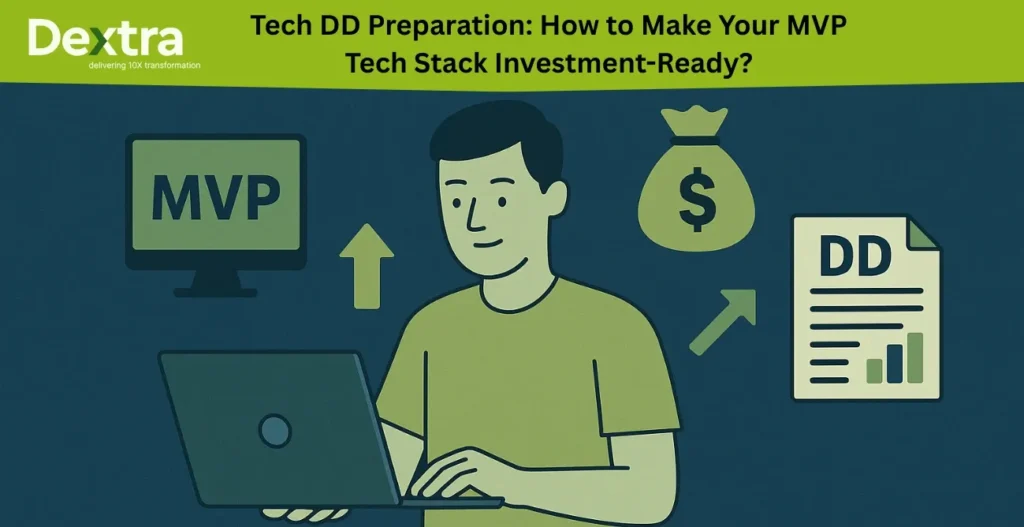
Raising investment as a startup founder in 2025 means more than just having a working MVP. It’s about proving your tech can scale, stay secure, and withstand investor scrutiny. Our Study suggest, With up to 90% of startups failing, investors are more cautious than ever and tech DD has become a make-or-break step in the funding journey.
If you’re a startup founder and you’re planning to raise money, you’ve probably heard about tech due diligence. It’s when investors take a close look at your product and technology before deciding to invest. If you’ve already built your Minimum Viable Product (MVP), that’s a great first step. But turning that MVP into something investors trust and want to support? That’s where the real work begins.
Going from an MVP to an investor-ready product is a big move. And it’s not just about adding features or fixing bugs, but more about making sure your product is solid, safe, and built to grow. Tech DD is a key part of this process. It shows investors that your tech can handle growth and won’t fall apart under pressure.
In this blog, we’ll discuss how to get ready for tech DD, what questions you should expect, and how the right MVP development services for startups can help you get there faster.
Ready for Investor Confidence?
Get Tech DD support from Dextralabs and make your MVP investment-ready.
Book a Free ConsultationWhy Tech Due Diligence Matters for Startups?
Tech due diligence (or tech DD) is when investors take a close look at your product’s tech side. They’re not just listening to your pitch, but they’re also checking if your code is clean, your systems are secure, and your product can grow. If you’re raising money, tech DD usually comes in once investors are seriously interested.
From their side, they just want to make sure they’re putting their money into something solid. They’ll ask stuff like: “Is the code easy to manage?” “Can this tech handle more users?” “Is it built the right way?” That’s why being ready for tech DD preparation questions really matters.
Now, your MVP’s great for testing ideas fast, but it’s not enough for investors. They want to see an investor-ready product, something stable, secure, and scalable. That’s where a solid MVP audit checklist comes in as helpful. It helps you spot what needs fixing before the hard questions start.
MVP Development: Building a Strong Foundation
When you’re just getting started, building your MVP is a big step. It’s how you show that your idea works without spending too much time or money. But how you build it really matters. A weak MVP can slow you down when you try to raise funds. That’s why choosing the right MVP development services for startups is so important. You need a strong base that can handle investor questions later on.
What Investors Expect from an MVP?
Investors don’t expect a full product during early meetings, but they do expect your MVP to be solid. They’ll want to see:
- Signs of product-market fit—are users actually interested?
- A flexible architecture—can your product grow as the business grows?
- Lean but scalable tech choices—nothing too bulky, but ready to expand
That’s the balance good MVP development should strike.
Choosing the Right MVP Development Services
You’ve got to be smart about how you build. Some startups try to do it all in-house, but many work with experienced MVP development services to save time and avoid mistakes.
- In-house vs. outsourced – Outsourcing can work well if the team knows what early-stage startups need.
- Start technical documentation from Day 1 – It’ll save you during tech DD.
- Use tools and tech stacks that’ll make tech due diligence easier later.
The best MVP development services for startups think about all of this from the start.
MVP Audit Checklist to Future-Proof Your Product:
Before you talk to investors, run through an MVP audit checklist to make sure your tech is ready. Here’s a quick version:
- Clean and simple source code
- Basic infrastructure setup with CI/CD tools
- Clear data structure documentation
- Early security practices (like password protection and access control)
Preparing for Tech DD: Step-by-Step Checklist
If you want to build an investor-ready product, you’ve got to be ready for tech DD. Here’s a simple checklist to help with your tech DD preparation.

1. Documentation Readiness
- Add clear software architecture diagrams to show how your system works
- Include API docs and explain user flows across the platform
- Share any DevSecOps policies and compliance details you follow
2. Creating a Virtual Data Room (VDR)
- Add key items like GitHub access, tech specs, and your JIRA or Notion boards
- Keep it clean and give secure access only to those who need it
3. Technical Performance Metrics
- Show off KPIs like uptime, latency, and how often you deploy
- Share stats on test coverage and how fast you fix bugs
- Mention where and how you’re using AI in your product
4. Product Demo & Walkthrough Readiness
- Build a demo that highlights speed, user experience, and how well it scales
- Have your CTO or product owner ready to lead the walkthrough with confidence
Anticipating Tech DD Questions from Investors
When you’re preparing for tech DD, investors will ask tough tech DD preparation questions. Here are some of the key ones you should be ready to answer:
- How do you ensure code maintainability? – Investors want to know if your code can grow and be easily fixed in the future.
- What’s your plan for scalability? – How will your tech handle more users or data as you grow?
- How are you handling compliance and data privacy? – Investors need to see that you follow legal and ethical standards.
- What past technical challenges have you faced and resolved? – Investors want to know you’ve overcome issues before and can handle future challenges.
- Is your current tech team future-ready? – Do you have the right skills in-house to support long-term growth?
- How do you balance the cost of development vs. the cost of maintenance? (CapEx vs OpEx) – Show how you’re thinking about both short-term and long-term costs.
DevSecOps & Security Readiness for DD
DevSecOps is a key factor in tech DD, and investors love seeing it. Here’s why and how you can prove your security readiness:
- Why DevSecOps is a major green flag in DD – It shows you’ve built security into your development process from day one.
- How to demonstrate security integration in CI/CD – Share how security checks are built into your continuous integration and delivery pipeline.
- Red flags investors look for – If you don’t have logging, encryption, or backups in place, that’s a huge red flag for investors.
Building an Investor-Ready Product: Best Practices
Creating an investor-ready product means preparing your tech to stand up to due diligence. Here are some best practices to help you get there:
- 4+1 architectural view model for audits – This approach gives a clear view of your system’s architecture, making it easier to explain and audit.
- Aligning your roadmap to tech capabilities – Your product’s future development should be aligned to your tech team’s ability to scale it.
- Creating a RACI for team structure – Clearly define roles and responsibilities so everyone understands what they are accountable for.
- Outsourcing a third-party audit before investor DD – Having an external audit helps identify and fix any issues before investors take a close look.
USA vs UAE: Regional Considerations for Tech DD
When preparing for tech DD, it’s important to understand the regional differences between the USA and the UAE. Here are a few things to keep in mind:
- Compliance and regulatory differences – The USA and UAE have different laws around data protection and privacy. Be sure your product complies with the local regulations in the market you’re targeting.
- Local vs international cloud hosting issues – In the USA, cloud providers are widely used, but in the UAE, you may need to consider data residency laws. Choose a hosting provider that works well for your region.
- Preferred tools and security standards (SOC2 vs ISO) – In the USA, SOC2 compliance is often a must, while in the UAE, ISO standards might be more common. Make sure your tech stack aligns with the standards investors expect in each region.
Final Thoughts: Preparing Early Means Funding Fast
The earlier you’re prepared for tech DD, the sooner you can get funding. It takes time to transition your MVP to a fully investor-ready product, but if you get it right, it will pay off. Good preparation allows you to mitigate risk and build confidence with investors. Showing them you’ve considered the details positively influences investors’ feelings of security and should give them confidence in their investment decision.
Need help getting tech DD-ready? Contact our MVP experts at Dextralabs and let us help you prepare for success.
From Code to Capital
Let Dextralabs validate your tech with expert Due Diligence.
Book a Free Consultation