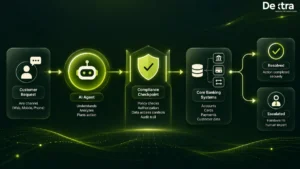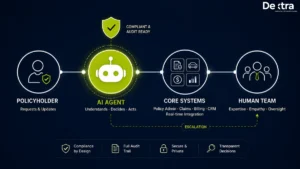

The biggest challenge enterprises face is not deploying AI agents in finance but the fact that most workflows still break in the middle, forcing finance teams to manually bridge gaps between ERP systems, approval layers, and reporting tools, which prevents true end-to-end automation.
This becomes most evident when finance teams move from AI experiments to automating reconciliation, invoice processing, and compliance workflows. ERPs already contain the required financial data, but they were designed for human interaction, not machine speed automation. By 2025, 47% of finance teams had already deployed at least one AI agent, showing how quickly AI driven finance operations are becoming mainstream.
As AI agents in finance start making large volumes of API calls, enterprises run into ERP API rate limiting, concurrency restrictions, and OData API limitations across platforms like SAP S/4HANA, Oracle Fusion Cloud, and NetSuite. This is why the real challenge with ERP with AI agents for finance workflows is choosing an integration architecture that can scale securely and reliably. In this blog, you’ll learn the main ERP integration patterns, their trade offs, and the finance workflows where AI agents deliver the fastest ROI.
Three Architecture Patterns for Connecting AI Agents to Your ERP
AI agents are architecturally designed to seamlessly process hundreds and thousands of invoices at a time against PO data in your ERP. However, there is a fundamental infrastructure problem.
EPR APIs are usually designed for a human operator pulling up one invoice at a time – not an agent querying thousands of records in parallel. SAP’s OData endpoints process requests synchronously. NetSuite caps concurrent API connections at 10–25 depending on your license tier. Meanwhile, Oracle’s REST APIs paginate large datasets.
To solve this problem, three core architecture patterns have emerged, each with different trade-offs around flexibility, data freshness, and implementation complexity. Let’s go through these architectural patterns one-by-one.

Pattern 1: Native AI Layer
The native AI layer is the simplest way to bring AI into ERP systems because everything runs inside the ERP itself. The native AI layer uses the AI capabilities already built into the ERP platform, such as SAP Joule, Oracle AI Agent Studio, Microsoft Copilot for Finance, or NetSuite AI Connector Service. It offers faster deployment and lower integration overhead, but customization and cross system orchestration are often limited to the vendor ecosystem. In some cases, native AI agents can be configured in a very short time, allowing finance teams to start using them quickly with minimal infrastructure changes.
Pattern 2: Bolt On Agent Layer
The Bolt-On Agent Layer is an architecture where AI agents are built outside the ERP system and connected to it through APIs to extend its capabilities beyond native limitations. In practice, these agents interact with ERP systems through APIs such as OData, SuiteQL, REST APIs, or Power Platform connectors. This gives teams more flexibility to use AI agents for tasks, build custom workflows, and connect multiple systems, but it also introduces challenges around ERP API rate limiting, auditability, and agent to ERP connectivity. To maintain security and governance, these AI agents typically connect directly with ERP systems through controlled integration layers with role based access controls for sensitive financial data.
Pattern 3: Data Layer Abstraction
The Data Layer Abstraction moves ERP data into a staging or analytics layer such as Snowflake, BigQuery, or Databricks, where AI agents interact with replicated data instead of the live ERP system. It reduces pressure on ERP APIs and supports large scale financial data orchestration, although real time data freshness and write back complexity become important trade offs.
Here’s how each pattern compares across the dimensions that matter for enterprise finance.
| Dimension | Pattern 1: Native AI Layer | Pattern 2: Bolt On Agent Layer | Pattern 3: Data Layer Abstraction |
| Data freshness | Data remains fully real time because the AI capabilities operate directly inside the ERP environment. | Data can remain real time, but performance depends on API concurrency limits, ERP rate throttling, and request handling capacity. | Data is usually near real time through CDC pipelines or refreshed in batches using ETL processes rather than live ERP access. |
| Can the agent write back to ERP? | AI agents can directly create, update, and process transactions within the ERP system. | AI agents can write back through ERP APIs, although organizations must enforce approval workflows, audit controls, and segregation of duties. | Agents typically cannot write back to the ERP because they work on replicated read only datasets. |
| Workflow flexibility | Workflow customization is limited to the automation capabilities already provided by the ERP vendor. | Organizations can build fully customized workflows based on their finance operations, approval structures, and business logic. | This model supports flexible analytics and reporting workflows, but it is not designed for transactional finance operations. |
| API constraints | Native integrations largely avoid external API bottlenecks because the AI layer operates within the ERP platform itself. | Organizations often face ERP API rate limiting, synchronous processing bottlenecks, pagination restrictions, and concurrency limits. | Since agents interact with replicated datasets instead of the live ERP, API limitations are mostly eliminated. |
| Implementation time | Deployment is usually faster because teams mainly configure and enable existing ERP AI capabilities. | Implementation can take several months because teams must build, integrate, secure, and test the custom agent architecture. Traditional finance software deployments often take 4 to 8 months due to integration and change management complexity. | Organizations need time to establish replication pipelines, middleware abstraction layers, and analytics infrastructure before deployment. |
| Security model | Security follows the ERP’s existing role based access controls and governance framework. | Teams must manage API credentials, access policies, audit trail ERP agent actions, and zero data retention architecture independently. | Security depends heavily on governance controls for the replicated data layer and financial data orchestration environment. |
| Best for | This approach works best for standard finance workflows such as accounts payable automation, reconciliation, forecasting, and reporting already supported by the ERP vendor. | This model is best for custom finance workflows, agentic AI for finance and accounting, and cross system process orchestration. | This approach works best for large scale analytics, cross entity reconciliation, historical trend analysis, and board level reporting. |
| Start here if… | Start here if you want faster deployment and quick wins using your ERP vendor’s native AI capabilities. | Start here if your finance workflows are too specific or complex for vendor built AI features. | Start here if your AI agents need to analyze large datasets without affecting live ERP system performance. |
Most enterprises do not rely on just one integration model. In practice, ERP with AI agents for finance workflows usually follows a hybrid approach where native ERP AI handles standard workflows, custom bolt-on agents manage specialized finance operations, and data layer abstraction supports large scale analytics. The real decision is not choosing one architecture, but choosing the right pattern for each workflow.
ERP Platform Readiness for AI Agents in 2026
Most major ERP platforms are actively building native support for Agentic AI in finance, but their readiness levels, API architectures, and scalability constraints still vary significantly. Some platforms are optimized for faster agent deployment, while others require heavier middleware abstraction layers and custom integration architecture to support enterprise scale automation.
Here’s how the major ERP platforms compare for AI agent readiness, API architecture, and integration constraints.
| ERP Platform | AI Agent Readiness (2026) | API Architecture for Agents | Key Constraint for AI Agents | Notable Agent Capability |
| SAP S/4HANA | SAP is actively expanding AI capabilities through Joule AI and its Azure OpenAI partnership. | SAP primarily relies on OData APIs, while many enterprises still use legacy BAPI and RFC integrations. | The synchronous OData model and fragmented module APIs create scalability challenges for agent workloads. | Predictive cash management powered through Azure OpenAI integration. |
| Oracle Fusion Cloud | Oracle offers advanced native AI capabilities through AI Agent Studio and agentic ERP applications. | Oracle mainly uses REST APIs with some legacy SOAP support and event driven integrations. | Large dataset pagination and inconsistent custom object APIs can slow workflow orchestration. | AI Agent Studio supporting multi agent financial workflows. |
| NetSuite | NetSuite is highly optimized for mid market AI deployments through SuiteQL and AI Connector Service. | NetSuite uses SuiteQL alongside SuiteTalk REST and SOAP APIs within a unified database architecture. | Strict concurrency slot limits can restrict large scale AI agent activity. | AI Connector Service with structured prompt libraries and role based access controls. |
| Microsoft Dynamics 365 | Microsoft continues expanding Copilot for Finance and Power Platform based AI automation. | Dynamics 365 relies on Dataverse APIs, Power Automate connectors, and Azure services. | Advanced agent workflows often require additional Power Platform and Azure licensing layers. | Copilot for Finance supporting natural language reporting and variance analysis. |
The maturity gap between ERP platforms is closing quickly. Task specific AI agents are increasingly being built into enterprise applications, and major ERP providers are expanding native AI features across finance and operations. However, enterprise finance teams still require workflows and integrations beyond what most vendors currently support, which is where custom AI agent architecture continues delivering value.
Top 5 Finance Workflows Where ERP Integrated Agents Deliver Fastest ROI
Here are the top five finance workflows where ERP integrated AI agents are delivering the fastest ROI for enterprises. These use cases combine high transaction volume, repetitive manual work, and heavy ERP dependency which makes them ideal for automation through AI agents in finance.
1. Accounts Payable Automation
Accounts payable is often the first finance workflow enterprises automate because it involves high transaction volume and repetitive validation tasks. An AI agent for accounts payable automation can handle invoice matching, document processing, expense classification, GL coding, and approval routing while enforcing spending policies across finance workflows. Most organizations use a bolt on architecture here because agentic AI for accounts payable often requires custom workflows, vendor specific rules, and approval logic beyond native ERP capabilities.
The operational impact is significant. According to Ardent Partners, the average cost to process a single invoice is around $9.40, while highly automated AP teams can reduce that cost to nearly $3 per invoice. Organizations using AI agents for accounts payable also report processing times up to 80% faster than traditional automation tools.
2. Month End Close Acceleration
Month end close processes are highly dependent on ERP reconciliation workflows, intercompany adjustments, and exception tracking across finance entities. AI agents can coordinate reconciliation checks, identify unmatched transactions, validate journal entries within defined thresholds, and generate close progress dashboards automatically. Most enterprises adopt a hybrid integration approach here, combining native ERP reconciliation features with custom agents for exception handling and workflow orchestration.
This is where ERP integrated AI becomes operationally valuable rather than just task based automation. Research from FinRobot showed ERP based financial workflows achieving up to 40% faster processing times and a 94% reduction in errors through agent driven automation.
3. Cash Forecasting and Liquidity Management
Cash forecasting requires continuous analysis across accounts receivable, accounts payable, procurement commitments, payment schedules, and historical cash flow patterns. AI agents can pull this information from ERP systems and generate rolling liquidity forecasts that update dynamically as transactions change. Since this workload involves large scale financial analysis rather than transactional write backs, most organizations use a data layer abstraction model instead of querying the live ERP directly.
This approach also helps enterprises avoid ERP API rate limiting and concurrency bottlenecks during forecasting cycles. By shifting analytical workloads into platforms like Snowflake or Databricks, finance teams can run more advanced forecasting models without affecting ERP performance.
4. Compliance Monitoring and Regulatory Reporting
Compliance monitoring is another high value use case because ERP transactions constantly need validation against internal controls, regulatory policies, and audit requirements. AI agents can monitor journal entries, invoice approvals, tax calculations, and revenue recognition workflows in real time while flagging suspicious activity or policy violations automatically. AI agents also enhance internal controls by enforcing approval thresholds, identifying potential fraud patterns, and validating transactions against established business rules. Most enterprises implement this through a bolt on architecture using event driven integrations connected to ERP transactions.
This model works especially well for organizations managing SOX compliance, multi entity reporting, and audit documentation at scale. Instead of reviewing transactions manually after the fact, finance teams can identify compliance risks as they happen.
5. Vendor Master Data Management
Vendor master data issues create downstream problems across procurement, payments, compliance, and financial reporting. AI agents can validate supplier records against sanctions databases, detect duplicate vendors across business units, verify tax information, and monitor banking changes for fraud risks. Because these workflows require both read and write access to ERP master data modules, enterprises usually deploy them through custom bolt on agent architectures.
The value here comes from reducing operational risk and improving data quality across the finance ecosystem. For large enterprises managing thousands of suppliers across multiple entities, AI driven vendor governance can significantly reduce duplicate payments, onboarding delays, and compliance exposure.
Technical Realities of ERP + Agent Integration: What CTOs Need to Know Before Starting
Here are some important technical realities finance leaders and CTOs should understand before integrating autonomous AI agents with ERP systems for financial operations.
1. ERP API limits become a problem faster than expected
Most ERP systems were designed for employees processing transactions manually, not for finance AI agents operating continuously at machine speed. Platforms like NetSuite limit how many API requests can run simultaneously, while SAP S/4HANA handles many requests synchronously. When agents operate across reconciliation, invoice matching, or reporting workflows, the integration layer must manage request queues, retries, and API rate limits carefully.
2. Custom fields make integrations more complex
Most enterprise ERP systems contain years of custom fields, workflow changes, and business specific configurations. Autonomous AI agents need to understand these fields to process financial transactions correctly, but many of them are missing from standard API schemas. This is why mapping ERP data structures into agent workflows often takes longer than building the agent logic itself.
3. AI agents need the same financial controls as employees
Traditional finance automation tools usually follow fixed workflows, but finance AI agents can make decisions and trigger actions dynamically. If an agent can post journal entries, approve invoices, or process payments, it must follow the same approval rules, audit controls, and segregation of duties as finance teams. Every action should remain fully traceable inside the ERP’s native audit trail.
4. Data privacy and retention rules matter from day one
Financial operations involve highly sensitive ERP data, so compliance requirements cannot be treated as an afterthought. Many enterprises now require zero data retention architecture, where financial information is processed temporarily without being permanently stored outside the ERP environment. Data residency, encryption, and access controls should be defined before deployment begins.

These are the first 4 areas we address in every ERP integration project at Dextra Labs. Before building autonomous AI agents or workflow logic, we evaluate API concurrency limits, custom ERP field structures, write back controls, and data residency requirements for the specific ERP environment. The integration architecture always comes before agent intelligence because finance AI agents can only be trusted when they interact with ERP systems securely, reliably, and within the operational limits of the platform.
Closing Thoughts
The question is no longer whether AI agents belong in finance operations. Gartner predicts that task specific AI agents will be integrated into 40% of enterprise applications by 2026, showing how quickly enterprises are moving toward AI driven workflows. The real challenge with ERP with AI agents for finance workflows is selecting the right integration architecture for your ERP environment, finance processes, and compliance requirements.
Most enterprises now rely on a mix of native ERP AI capabilities, custom bolt on agents, and data layer abstraction to support different financial operations at scale. Dextra Labs helps enterprises integrate AI agents with platforms like SAP S/4HANA, Oracle Fusion Cloud, NetSuite, and Microsoft Dynamics 365 while managing ERP concurrency limits, custom field mapping, write back controls, and compliance architecture for enterprise finance teams.
FAQs:
Q1. How do AI agents improve ERP finance workflows?
AI agents automate routine tasks like invoice processing, reconciliation, and data entry with minimal human intervention. This improves operational efficiency, reduces delays, and also helps finance teams focus more on strategic planning instead of repetitive work.
Q2. Can AI agents work with legacy ERP systems?
Yes, AI agents can integrate with many legacy systems through APIs, middleware, and data abstraction layers. Most enterprises use artificial intelligence as a bolt on layer instead of replacing their existing ERP infrastructure.
Q3. What finance tasks are best suited for AI agents?
Finance AI agents work best for high-volume workflows such as accounts payable automation, compliance monitoring, journal entries, and reconciliation. These workflows involve repetitive data entry and rule-based processes where fewer errors and faster execution matter most.
Q4. Do AI agents replace finance teams completely?
No, AI agents are designed to support finance teams and not to replace them entirely. They handle routine tasks with minimal human intervention while finance leaders continue managing approvals, strategic planning, and complex financial decisions.
Q5. Why are enterprises using AI agents in finance operations?
Enterprises are adopting artificial intelligence in financial operations to gain real time insights, improve accuracy, and scale automation across core business functions. AI agents also help organizations process financial data faster while maintaining governance and compliance controls.
Q6. Can AI agents improve financial reporting and forecasting?
Yes, autonomous agents can automate financial reporting by reducing manual processes involved in data collection, validation, and analysis. This helps finance teams generate faster reports with fewer resources while improving accuracy through predictive analytics and continuous monitoring. Even with advanced automation, human oversight remains important for approvals, compliance reviews, and strategic financial decisions.