Natural Language Processing (NLP) is no longer limited to research labs or experimental AI projects. Today, the applications of NLP are part of everyday life. Customer support chatbots answer queries in seconds, voice assistants respond to commands, translation apps break language barriers, spam filters protect inboxes, and healthcare providers use NLP to organize medical records. Every such new NLP application is helping people and businesses interact with technology in a faster and more natural way.
According to Fortune Business Insights, the global NLP market is expected to grow from USD 45.74 billion in 2026 to USD 193.4 billion by 2034, at a CAGR of 19.7%. This growth shows the increasing applications of natural language processing across industries. In 2026, businesses are no longer asking if they should adopt NLP. Their focus is on finding the right applications of natural language processing that improves customer experience, increases efficiency, and delivers measurable business results.

This guide covers 15 real-world applications of NLP across consumer, business, and industry use cases. You’ll also learn how organizations in the USA, UAE, and Singapore are using NLP to automate workflows, improve decision-making, and build smarter AI systems. At Dextra Labs, we help startups and enterprises turn NLP applications into production-ready solutions, from AI agents and RAG systems to LLM-powered workflows.
What Are the Applications of NLP? A Quick Overview
The applications of Natural Language Processing include all the ways computers use human language to understand, process, and respond to text or speech. From answering customer questions to translating languages and analyzing documents, the applications of natural language processing help businesses automate tasks, improve communication, and make better decisions.
The applications of NLP can be grouped into four broad categories:
- Consumer-Facing Applications: These include chatbots, virtual assistants, language translation, and smart search.
- Business Operations: These include Customer support automation, sentiment analysis, document processing, and email classification.
- Industry-Specific Applications: Used in healthcare, finance, retail, legal services, education, and other specialized use cases.
- AI-Native Systems: The latest application of NLP in AI, including AI agents, LLM-powered applications, RAG systems, and multimodal AI that can understand context, retrieve enterprise knowledge, make decisions, and complete multi-step tasks autonomously.
In the next section, we’ll look at 15 real-world applications of NLP that are helping businesses improve efficiency, deliver better customer experiences, and build smarter AI-powered products.
Top 15 Applications of NLP in 2026
Below are 15 of the most important NLP applications in 2026, along with how they work, where they’re being used, and the value they create for organizations.

1. Chatbots and Conversational AI
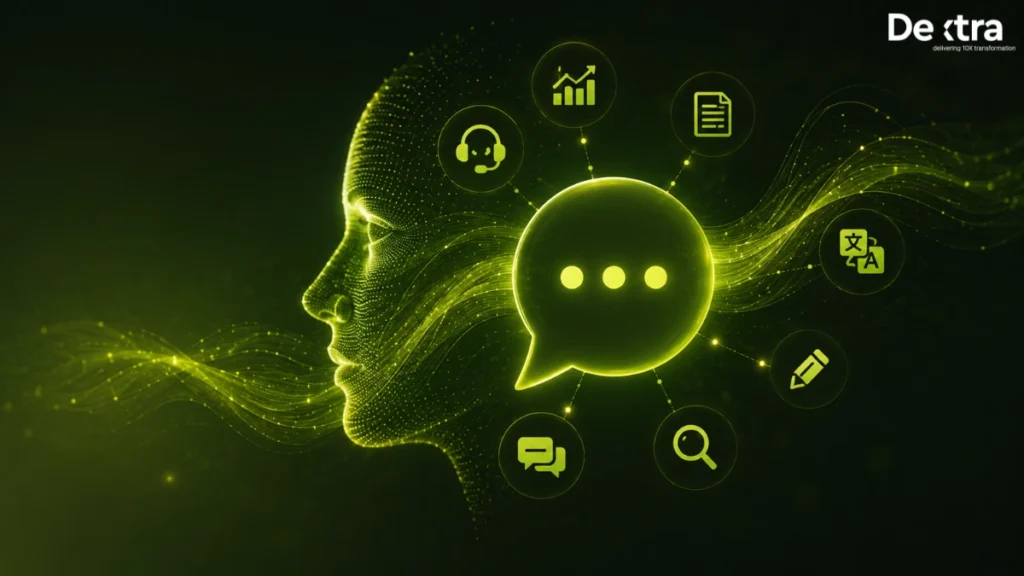
Chatbots and conversational AI are among the most widely used applications of NLP. They understand customer questions, identify user intent, and generate natural responses which makes conversations with machines feel more human. These systems including ChatGPT, Claude, Gemini, Perplexity combine intent recognition with large language models (LLMs) to understand context and provide accurate answers in real time.
Example: Enterprise AI Assistants
In 2026, retail brands, banks, and SaaS companies are using GPT-5 and Claude-powered assistants to handle customer queries, recommend products, and provide 24/7 support across websites and mobile apps.
Business impact: Chatbots reduce support costs, improve response times as well as allow customer service teams to focus on more complex requests.
2. Voice Assistants
Voice assistants are another popular application of NLP that allows users to interact with devices using natural speech. They help people perform everyday tasks without typing or touching a screen. Voice Assistants work by converting speech into text, understanding the user’s intent through natural language processing, and generating spoken responses using text-to-speech technology.
Example: Siri, Alexa, and Google Assistant
In 2026, voice assistants are becoming multimodal, allowing users to switch between voice, text, and images during a single interaction. They are also being integrated into cars, smart homes, and workplace applications.
Business impact: Voice assistants improve accessibility, create hands-free experiences, and help businesses deliver faster and more convenient customer interactions.
3. Machine Translation
Machine translation is another one of the most used applications of natural language processing for businesses operating across different countries. It helps translate text and speech while preserving the meaning and context of the original content. Modern translation tools use transformer-based neural networks to understand complete sentences instead of translating words individually, resulting in more accurate translations.
Example: Google Translate, DeepL, and Meta’s NLLB
These platforms now support more than 200 languages, helping businesses localize websites, customer support, product descriptions, and marketing content for global audiences.
Business impact: Machine translation allows companies to reach international customers faster while reducing the cost and effort of manual translation.
4. Smart Email Filtering and Autocomplete
Smart email filtering is a practical NLP application that automatically organizes emails, detects spam, and suggests replies while users are composing messages. It has become a standard feature in modern productivity tools. It uses text classification to identify different types of emails and generative NLP models to predict words, complete sentences, and recommend responses based on context.
Example: Gmail Smart Compose and Microsoft Outlook
AI-powered email tools help users write faster, prioritize important messages, and reduce time spent managing crowded inboxes.
Business impact: Smart email features improve employee productivity, reduce inbox clutter, and make everyday communication more efficient.
5. Sentiment Analysis and Brand Monitoring
Sentiment analysis is considered one of the most valuable NLP applications for understanding how customers feel about a brand, product, or service. This helps businesses analyze reviews, social media posts, surveys, and support conversations to identify positive, negative, or neutral opinions. This NLP application works by using text classification and emotion detection models to understand the tone and intent behind customer feedback.
Example: Fortune 500 Brands
Many Fortune 500 companies use real-time sentiment dashboards to track customer feedback across multiple channels. This allows marketing and support teams to quickly identify emerging issues, monitor brand reputation, and respond before problems grow.
Business impact: Sentiment analysis helps businesses make faster decisions, improve customer satisfaction, and protect their brand reputation.
6. Customer Support Automation
Customer support automation helps businesses manage large volumes of customer queries without increasing support teams. It can answer common questions, route tickets to the right department, and prioritize urgent requests. The best thing is that Customer Support Automation combines text classification, intent detection, and generative AI to understand customer messages and provide accurate responses or route them to the appropriate agent.
Example: Zendesk AI and Intercom
Companies use AI-powered support platforms to automatically resolve routine queries, assist human agents during live chats, and prioritize tickets based on customer sentiment and urgency.
Business impact: Businesses can reduce support costs by up to 60%, improve agent productivity, and deliver faster customer service.
7. Document Processing and Intelligent Search (RAG)
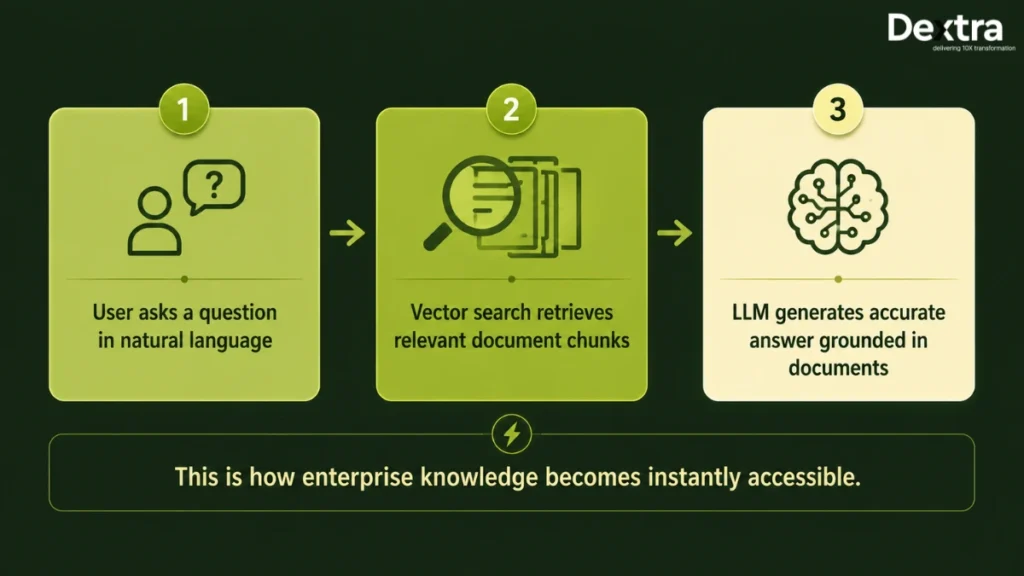
Document processing helps organizations find information across thousands of files in seconds. Instead of manually searching documents, employees can now ask questions and receive accurate answers from company knowledge. These systems use Retrieval-Augmented Generation (RAG), combining vector embeddings, intelligent search, and large language models to retrieve relevant information before generating a response.
Example: Enterprise Knowledge Assistants
Organizations across HR, legal, and product teams are using RAG systems to search company policies, contracts, technical documentation, and internal knowledge bases through natural language queries.
Business impact: Intelligent document search reduces the time spent looking for information and helps employees make faster, more informed decisions.
8. Text Summarization
Text summarization helps users quickly understand long reports, research papers, contracts, meeting notes, and other lengthy documents. It is one of the most practical applications of NLP for improving productivity. Here, NLP uses extractive and abstractive summarization techniques to identify the most important information and generate concise summaries without losing the main context of the content.
Example: Microsoft Copilot
Microsoft Copilot summarizes emails, meetings, presentations, and business documents, allowing professionals to review key information in just a few minutes instead of reading every page.
Business impact: Text summarization saves time, improves decision-making, and helps teams process large amounts of information more efficiently.
9. Content Moderation
Content moderation is an important NLP application that helps digital platforms identify harmful, offensive, or inappropriate content before it reaches users. In light of growing AI-generated content, automated moderation has become essential for maintaining safe online communities. It uses toxic language detection, policy classifiers, and contextual language models to identify spam, hate speech, misinformation, abusive comments, and policy violations.
Example: Social Media and Online Marketplaces
Social media platforms, gaming communities, and online marketplaces rely on AI-powered moderation systems to review millions of posts, comments, and product listings every day.
Business impact: Automated moderation improves user safety, supports regulatory compliance, and reduces the manual effort required to review large volumes of content.
10. Healthcare (Clinical NLP)
Healthcare is one of the fastest-growing areas for the applications of NLP. Hospitals and healthcare providers use NLP to summarize medical records, analyze clinical notes, support diagnoses, and for improving patient care. Clinical NLP models process unstructured medical text, identify important medical terms, and extract meaningful insights to help doctors make informed decisions.
Example: Clinical Decision Support Systems
Hospitals are using NLP models to review radiology reports, highlight critical findings, and prioritize urgent cases. AI also helps summarize patient histories, allowing doctors to spend less time on paperwork and more time with patients.
Business impact: Clinical NLP improves efficiency, supports faster diagnoses, and allows healthcare professionals to focus more on patient care.
11. Finance (Risk Detection and Compliance)
The financial industry uses NLP to detect fraud, monitor compliance, analyze market trends, and manage financial risks. NLP helps financial institutions process large volumes of reports, transactions, and customer communications more efficiently. It combines named entity recognition (NER), sentiment analysis, and text mining to identify suspicious activities, monitor regulations, and extract valuable insights from financial data.
Example: Banking and Financial Services
Banks are using NLP to detect unusual transaction patterns in real time, monitor compliance documents, and analyze financial news to support investment and risk management decisions.
Business impact: NLP helps financial institutions reduce fraud, improve compliance, and make faster, data-driven decisions.
12. Legal (Contract Analysis)
Contract analysis is one of the most valuable NLP applications in the legal industry. Law firms and legal teams use NLP to review contracts, identify important clauses, compare agreements, and speed up legal research. These solutions use named entity recognition, relationship extraction, and large language models to understand legal documents and answer complex legal questions.
Example: Harvey AI, Spellbook, and EvenUp
Legal professionals today use AI-powered platforms to review contracts, identify risks, draft legal documents, and conduct legal research much faster than traditional manual processes.
Business impact: NLP reduces contract review time, improves accuracy, and allows legal teams to handle more work without increasing costs.
13. Education
From personalized learning to automated assessments, NLP is helping students learn more effectively while reducing the workload for teachers. While the applications of NLP class 10 curriculum introduce the basics, today’s AI-powered education platforms show how these technologies are transforming learning at every level. NLP powers essay evaluation, quiz generation, language learning platforms, and adaptive learning systems by understanding student responses and generating personalized feedback.
Example: Duolingo Max
Duolingo Max uses GPT-powered AI to provide personalized language lessons, explain mistakes, and simulate real conversations, creating a more interactive learning experience.
Business impact: NLP helps educational institutions deliver personalized learning, improve student engagement, and automate repetitive academic tasks.
14. AI Agents and Workflow Automation
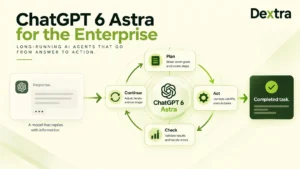
AI agents represent the next generation of applications of NLP, going beyond answering questions to completing real tasks. They can understand instructions, plan multiple steps, use external tools, and automate workflows with minimal human involvement. AI Agents combine large language models (LLMs), reasoning capabilities, tool integration, and workflow automation to perform tasks across different business applications.
Example: Devin, Claude Code, and AI Sales Agents
Businesses are using AI agents to write code, qualify sales leads, conduct market research, create reports, and automate repetitive business processes.
Business impact: AI agents reduce manual work, improve productivity, and allow teams to focus on higher-value tasks.
15. Multimodal AI (Text + Voice + Vision)
Multimodal AI is one of the newest applications of natural language processing, allowing AI systems to understand and process text, voice, images, and documents together. This creates more natural and insightful interactions than text-only models. These systems combine NLP with computer vision and speech recognition, enabling AI to understand information from multiple formats and generate context-aware responses.
Example: GPT-5 and Gemini
Businesses are using these capabilities in healthcare to analyze patient records alongside medical scans, and in retail to power voice-assisted visual search and personalized shopping experiences.
Business impact: Multimodal AI helps businesses build smarter products, improve customer experiences, and automate complex tasks that involve multiple types of data.
Applications of NLP in AI
Modern AI systems like large language models (LLMs), AI agents, and multimodal AI rely on NLP to understand and work with human language. The application of NLP in AI helps these systems understand user intent, interpret context, and generate responses that feel natural as well as relevant. This is also why NLP is often called the language layer of AI.
In other words, NLP gives AI the ability to understand language before it can generate meaningful responses or complete tasks.
Generative AI builds on this foundation. While generative AI is responsible for creating text, answering questions, and completing tasks, NLP enables AI to understand what users are asking in the first place. Together, they make it possible for AI to hold conversations, summarize information, translate languages, and perform a wide range of language-based tasks.
How Businesses Are Deploying NLP Applications in 2026
The applications of NLP are not confined only to large tech companies. Businesses of every size are using NLP to automate routine tasks, improve customer experiences, and make better use of their data. The way NLP is implemented often depends on the organization’s size, goals, and stage of growth.
Here’s how different types of businesses are using NLP to solve everyday challenges and create business value:
- Startups: Build AI-powered MVPs with chatbots, smart search, sentiment analysis, and content generation to launch products faster and validate ideas.
- SMEs: Automate customer support, streamline document processing, organize business data, and equip sales teams with AI-powered assistance to improve productivity.
- Enterprises: Deploy enterprise LLMs, RAG systems, compliance monitoring solutions, and industry-specific AI applications that can scale across teams and departments.
Moving an NLP solution from a prototype to a production-ready system requires more than choosing the right AI model. Businesses also need to consider factors like data security, compliance, integration with existing systems, scalability, and long-term costs.
At Dextra Labs, we work with startups, SMEs, and enterprises across the USA, Singapore, and the UAE to turn NLP applications into production-ready solutions. Our expertise includes enterprise LLM deployment, custom AI model implementation, AI agent development, and LLM prompt engineering, with a strong focus on building solutions that are scalable, cost-effective, and designed to deliver measurable business value.
Challenges in Deploying NLP Applications
Even though the applications of NLP offer significant business value, organizations can face several challenges during implementation. Below are some of the most common ones:

- Data Quality: NLP models perform best with clean, well-structured data. Therefore, incomplete, outdated, or inconsistent data can reduce accuracy and affect results.
- Model Hallucinations and Bias: AI models can sometimes generate incorrect information or reflect biases present in their training data which makes human oversight important.
- Regulatory Compliance: Businesses handling sensitive information must comply with regulations such as GDPR, HIPAA, and India’s DPDP Act to ensure data privacy and security.
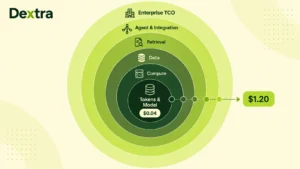
- Cost Management: Running large language models can become expensive, especially when token usage and inference costs increase as applications scale.
- Multilingual and Domain-Specific Accuracy: General-purpose models may struggle with industry-specific terminology or multiple languages without additional training or fine-tuning.
The Future of NLP Applications
The applications of NLP are evolving rapidly and the next few years will bring even more advanced business use cases. As AI becomes more capable, NLP will move beyond understanding language to powering smart systems that can reason, act, and collaborate with people at the same time.
Some of the biggest trends that are expected to shape the future include:
- Multimodal AI: NLP models are increasingly combining text, voice, images, and videos into a single experience which is making interactions with AI more natural and intuitive.
- Agentic NLP systems: The next generation of AI won’t just answer questions. AI agents will be able to plan tasks, use tools, make decisions, and complete multi-step workflows with minimal human input.
- Small Language Models (SLMs): Many organizations are adopting domain-specific SLMs that are more affordable, faster, and easier to deploy for industries such as healthcare, finance, manufacturing, and legal services.
As businesses explore these next-generation applications of NLP, having the right implementation strategy will be just as important as choosing the right technology. At Dextra Labs, we work with organizations that are taking this step, helping them move from early experiments to practical NLP deployments.
Conclusion
Natural Language Processing is no longer a technology that’s limited to research or experimentation. Today, it’s helping businesses automate routine work, improve customer experiences, simplify decision-making, and build smarter AI-powered products. The most successful applications of NLP are those that solve a clear business problem and deliver measurable results.
As more organizations adopt AI, having the right approach to NLP implementation will become increasingly important. At Dextra Labs, we work with startups, SMEs, and enterprises to build practical NLP solutions that fit their business needs and support long-term growth.
FAQs:
Q. What Is an Example of an NLP Application?
A common example of an NLP application is a virtual assistant like Apple Siri or Amazon Alexa. These systems use Natural Language Processing to understand spoken or typed language, identify the user’s intent, and generate the appropriate response or perform a requested task.
Q. What Are the Applications of NLP Class 10?
For Class 10 students learning about AI, the most common applications of NLP include:
– Chatbots and customer support bots
– Voice assistants like Siri and Alexa
– Machine translation tools like Google Translate
– Spam email filtering
– Autocomplete and predictive text
– Sentiment analysis
– Speech recognition
These examples help understand how Natural Language Processing is used in everyday life. Learning these use cases also provides a strong foundation for understanding more advanced AI technologies such as chatbots, large language models (LLMs), and AI agents.
Q. What Is the Application of NLP in AI?
The application of NLP in AI is to help machines understand, interpret, and generate human language. It acts as the language layer of AI, allowing systems to communicate naturally with users and process text or speech accurately. Some of its most common applications include conversational chatbots, machine translation, sentiment analysis, text summarization, and voice assistants like Siri and Alexa.
Q. How Is NLP Used in Business?
Businesses use Natural Language Processing (NLP) to automate routine tasks, improve customer experiences, and gain valuable insights from large volumes of text and speech data. Some of the common applications include AI-powered customer support, sentiment analysis of customer reviews and social media, document and contract processing, intelligent search, and conversational business intelligence that helps teams access information more quickly.
Q. Which Industries Use NLP the Most?
Natural Language Processing (NLP) is widely used in industries that handle large amounts of text and speech data. Some of the biggest adopters include healthcare for clinical documentation and patient records, finance for fraud detection and compliance, customer service for AI chatbots and support automation, and technology and telecom for virtual assistants, search, and intelligent customer interactions.
Q. What’s the Difference Between NLP and LLMs?
Natural Language Processing (NLP) is the broader field of AI that enables computers to understand, process, and interpret human language. Large Language Models (LLMs) are a type of NLP technology trained on massive amounts of text to generate human-like responses, answer questions, summarize information, and perform complex language tasks. To put it more simply, NLP is the foundation, while LLMs are one of its most advanced applications.
Q. How Can Startups Get Started with NLP Applications?
Startups can start by identifying a specific business problem that NLP can solve, such as automating customer support, analyzing customer feedback, improving search, or processing documents. Starting with a focused use case makes it easier to test the technology, measure results, and scale over time. For startups that need technical guidance, working with an AI development partner like Dextra Labs can help accelerate development and move NLP applications from prototype to production.