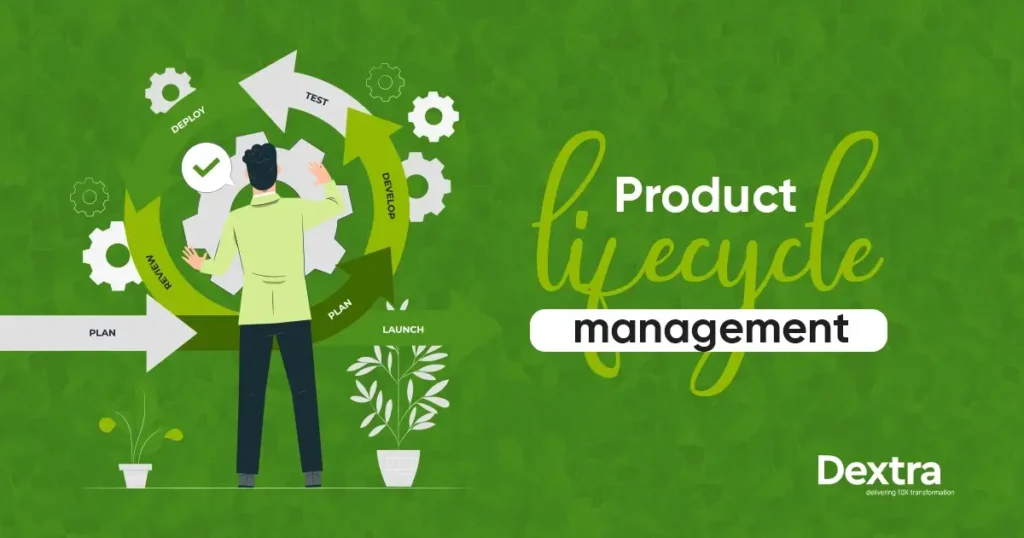
Managing a product doesn’t end when it reaches the market. From the initial idea and engineering design to manufacturing, distribution, maintenance, updates, and retirement, businesses need to coordinate large amounts of product data, processes, and stakeholders throughout the product’s lifecycle.
Product Lifecycle Management (PLM) provides a structured way to manage this complexity. PLM brings together people, product information, business processes, and technology systems so teams can collaborate around a shared view of the product and its development.
A well-implemented PLM approach can help organizations improve collaboration, reduce errors, accelerate product development, strengthen quality control, manage regulatory requirements, and make product information easier to access across departments.
Modern PLM is also becoming increasingly connected. Cloud platforms, IoT data, artificial intelligence, machine learning, and digital twins are extending PLM beyond engineering and manufacturing into continuous product improvement and lifecycle optimization.
In this guide, we’ll explain what Product Lifecycle Management is, how the PLM process works, its major components and benefits, important lifecycle metrics, and how AI and other technologies are changing modern PLM.
What Is Product Lifecycle Management (PLM)?
Product Lifecycle Management (PLM) is a business and technology approach for managing a product’s information, processes, and collaboration throughout its entire lifecycle, from the initial concept and design through development, manufacturing, distribution, maintenance, and eventual retirement.
PLM brings the people, processes, data, and systems involved in product development into a more connected framework. It helps organizations maintain product information, coordinate teams, manage changes, and keep product-related decisions aligned across different stages.
In Simple Terms:
A product typically moves through a journey such as:
Idea → Design → Develop → Manufacture → Launch → Improve → Retire
PLM provides the systems and processes that help teams manage this journey in a structured and coordinated way.
This distinction is important:
Product lifecycle = the stages a product goes through.
Product Lifecycle Management (PLM) = how an organization manages those stages, along with the information, processes, people, and collaboration involved.
In practice, PLM is particularly valuable when products involve multiple teams, complex engineering data, frequent design changes, manufacturing dependencies, or long operational lifecycles.
Key Components of a Product Lifecycle Management (PLM):
1. Ideation and Requirements
The process begins by defining what the product should solve and why it should exist.
Teams consider:
- Customer needs
- Market opportunities
- Business objectives
- Product requirements
- Regulatory constraints
These inputs establish the foundation for subsequent design and development decisions.
2. Product Design
Once requirements are established, engineering and product teams turn them into detailed product concepts and specifications.
This may involve:
- Product designs
- Technical specifications
- CAD models
- Prototypes
- Technical documentation
PLM helps keep these product records organized and accessible to the teams working on them.
3. Development and Validation
The product is developed, tested, and refined before moving into production.
Activities may include:
- Prototyping
- Simulation
- Testing
- Design reviews
- Engineering change management
Managing changes systematically is particularly important because modifications to one component or specification can affect other parts of the product and its manufacturing process.
4. Manufacturing
Once the design is validated, PLM connects product specifications and engineering information with manufacturing processes.
This helps manufacturing teams work from the appropriate product information and maintain alignment between engineering changes and production requirements.
5. Launch and Distribution
The product is prepared for release and brought to the market.
This stage can involve coordinating:
- Product release
- Documentation
- Supply chain activities
- Distribution
- Market launch
PLM helps maintain consistency between the product information developed during engineering and the information needed during launch and distribution.
6. Maintenance and Continuous Improvement
The product lifecycle does not end when the product reaches customers.
Organizations can use information such as:
- Customer feedback
- Product performance
- Service data
- IoT data
- Quality information
to identify problems, improve designs, and inform future product updates.
7. Product Retirement
Eventually, a product may reach the end of its commercial or operational life.
It may be:
- Discontinued
- Replaced
- Upgraded
- Recycled
- Decommissioned
PLM helps organizations manage this transition while preserving relevant product records, documentation, and historical information.
PLM Systems Types and How They Integrate
PLM rarely operates as a standalone system. In most organizations, product information is spread across engineering, manufacturing, finance, customer, and operational systems.
A PLM platform helps connect these systems so that product-related information can move between teams and processes more consistently.
PLM Platform
The PLM platform acts as the central system for managing product data, lifecycle processes, collaboration, and related workflows.
It provides a common environment for teams to manage product information and coordinate activities throughout the product lifecycle.
CAD / Engineering Systems
CAD and other engineering systems are used to create and manage technical product designs.
PLM can connect with these systems to manage associated design information, revisions, specifications, and engineering changes.
ERP
Enterprise Resource Planning (ERP) systems manage broader business processes such as:
- Finance
- Procurement
- Inventory
- Manufacturing
- Supply chain
Integration between PLM and ERP can help connect product and engineering information with downstream business and manufacturing processes.
MES
Manufacturing Execution Systems (MES) connect manufacturing operations with production processes.
Integrating PLM with MES can help connect product definitions and engineering information with what happens on the manufacturing floor.
CRM
Customer Relationship Management (CRM) systems contain customer, sales, and market information.
Connecting CRM with PLM can help product teams incorporate customer needs, feedback, and market information into product development and improvement.
IoT Platforms
IoT platforms can provide real-world data from products after deployment.
This information can include product performance, usage, operational conditions, or detected issues. Connecting this data with PLM can help organizations use real-world product information to inform maintenance, product improvements, and future development.
PLM as the Connecting Layer
The important point is that PLM does not necessarily replace these systems.
Instead, it often integrates with them to connect product information across the enterprise.
For example:
CAD / Engineering → PLM → ERP / MES → Product → IoT → PLM
This creates a more connected flow of product information, from design and manufacturing through real-world use and continuous improvement.
The value of PLM integration is therefore not simply having more systems. It is connecting the systems an organization already relies on so that product information remains consistent and useful across the lifecycle.
Also Read: Defining Product Led Growth | Purpose, Meaning, Examples
PLM vs ERP vs PIM
PLM, ERP, PIM, CRM, and MES can all manage business or product-related information, but they serve different purposes. Understanding these differences is important when evaluating which systems an organization actually needs.
| System | Primary Focus |
|---|---|
| PLM | Product development and lifecycle management |
| ERP | Enterprise business operations |
| PIM | Product information for sales and marketing channels |
| CRM | Customer relationships and interactions |
| MES | Manufacturing execution |
PLM
Product Lifecycle Management (PLM) focuses on the product itself, from concept and design through development, manufacturing, maintenance, improvement, and retirement.
It manages information such as product requirements, designs, engineering changes, specifications, and Bills of Materials.
ERP
Enterprise Resource Planning (ERP) focuses on broader business operations.
It commonly manages areas such as finance, procurement, inventory, manufacturing, supply chain, and other enterprise processes.
PIM
Product Information Management (PIM) focuses on organizing and managing product information used across sales, marketing, ecommerce, and other customer-facing channels.
A PIM helps ensure product descriptions, specifications, attributes, and related content are consistent across different channels.
CRM
Customer Relationship Management (CRM) focuses on customer and prospect relationships.
It manages information such as contacts, interactions, leads, opportunities, sales activities, and customer service information.
MES
Manufacturing Execution System (MES) focuses on executing and monitoring manufacturing operations.
It connects production processes with manufacturing activities on the shop floor.
How They Work Together
These systems are not necessarily competing alternatives. In a larger organization, they may work together as part of a connected enterprise technology environment.
For example:
PLM manages how a product is designed and developed → ERP manages related business and supply-chain processes → MES manages production execution → PIM manages product information for customer-facing channels → CRM captures customer interactions and feedback.
The key distinction is simple: PLM manages the product lifecycle, ERP manages enterprise operations, PIM manages product information for commercial channels, CRM manages customer relationships, and MES manages manufacturing execution.
Product Lifecycle Management Benefits
Benefits of Product Lifecycle Management
A well-implemented PLM system can improve how organizations manage product information, coordinate teams, and control processes throughout the product lifecycle. The benefits extend beyond engineering and can affect manufacturing, quality, compliance, cost, and long-term product improvement.
1. Better Product Collaboration
PLM gives teams access to shared and controlled product information, helping product, engineering, manufacturing, procurement, quality, and other stakeholders work from consistent data.
2. Faster Product Development
Standardized workflows and better coordination can reduce unnecessary delays between design, review, approval, and production activities.
3. Fewer Design and Data Errors
Centralized product data and version control reduce the risk of teams working from outdated drawings, specifications, or other product information.
4. Improved Product Quality
PLM can connect testing, design changes, quality processes, and product information across the lifecycle, helping teams identify and address issues earlier.
5. Better Regulatory Compliance
Organizations can maintain relevant product documentation, requirements, approvals, and records throughout development, making compliance activities easier to manage and trace.
6. Lower Development and Manufacturing Costs
Identifying design or process issues earlier can help reduce expensive redesigns, rework, material waste, and production problems later in the lifecycle.
7. Better Product Traceability
PLM provides greater visibility into product versions, components, engineering changes, approvals, and key decisions. This can be particularly important for complex or regulated products.
8. Stronger Sustainability Management
PLM can support sustainability initiatives by helping organizations manage information related to materials, product lifecycle impacts, recyclability, and environmental considerations.
The Broader Value of PLM
The value of PLM comes from connecting product information and processes rather than simply storing files in one system.
How AI Is Transforming Product Lifecycle Management
AI is adding a new layer of intelligence to PLM systems. Instead of using PLM only to store product information and manage workflows, organizations can use AI to analyze engineering data, identify patterns, support decision-making, and surface insights across the product lifecycle.
1. Design Optimization
AI can evaluate design alternatives against defined requirements and constraints, helping engineering teams compare options and identify potential improvements earlier in the development process.
2. Predictive Quality
Machine-learning systems can analyze historical and production data to identify patterns associated with defects or quality problems. This can help teams detect potential issues earlier and investigate their underlying causes.
3. Predictive Maintenance
IoT and AI can work together to analyze real-world product-performance data and identify patterns that may indicate potential failures.
This allows organizations to move from reacting to failures toward identifying maintenance needs earlier.
4. Engineering Knowledge Search
AI assistants can make large volumes of engineering information easier to search and understand.
They can help engineers find relevant information across:
- Product documentation
- Specifications
- Previous designs
- Change records
- Testing results
Instead of manually searching through multiple repositories, engineers can ask questions in natural language and quickly locate relevant information.
5. Automated Documentation
AI can reduce some of the manual effort involved in creating and maintaining product documentation, including:
- Technical documentation
- Product summaries
- Change reports
- Release documentation
Human review remains important, particularly where documentation has regulatory, safety, or engineering significance.
6. Requirements Analysis
Large product-development projects can involve thousands of requirements across different teams and systems.
AI can help identify potential conflicts, missing requirements, duplicates, or inconsistencies, giving engineering teams another way to review complex requirement sets.
7. Product Feedback Analysis
After a product reaches customers, AI can analyze large volumes of feedback to identify recurring problems and emerging trends.
Potential sources include:
- Customer reviews
- Support tickets
- Field reports
- Warranty data
Connecting these insights back to PLM can help product and engineering teams understand how products perform in the real world and identify opportunities for future improvements.
AI + PLM: From Product Data to Product Intelligence
The broader opportunity is to make PLM systems more intelligent, not simply more automated.
AI can help organizations understand engineering knowledge, detect quality patterns, analyze product feedback, support design decisions, and turn real-world product data into insights for the next product cycle.
The most valuable implementations will combine AI with existing PLM data and workflows while keeping engineers and product teams responsible for critical decisions.
Product Lifecycle Management: Future Trends
As Artificial Intelligence makes its way into every field, product lifecycle management is also being shaped by it. Artificial intelligence, the Internet of Things, and cloud-based systems are transforming how businesses execute product life cycles. This provides opportunities for growth and efficient working.
AI and MLearning: AI-powered product lifecycle management systems analyze primary datasets to forecast product performance, design optimization, and further improve decision-making procedures. AI helps eliminate errors, enhance the quality of work, and accelerate mundane tasks.
IoT Integration: The IoT devices help track the product’s performance in real time after the sales process. Customer feedback is required to enhance product life management by sharing continual updates and guiding future improvements.
Cloud-Based Systems: Cloud technology has enabled global teams to work together in real time, making product data more accessible. This reduces the cost of on-premise systems. Cloud-based systems are scalable and benefit businesses of all sizes.
Sustainable solutions: Due to environmental concerns, PLM emphasizes sustainable product development. Companies use PLM to integrate green practices such as decreasing resource use and improving recyclability.
Digital Systems: Digital systems are a virtual representation of the physical products, allowing companies to test and optimize the products in the digital world before applying them to the actual product. It eliminates costly prototypes and the marketing phase.
Measuring & Tracking the Product Life Cycles
For an efficient PLM, businesses must monitor and trace the product lifecycle metrics. These measurements also help in assessing the success and efficiency of each stage of the product life cycle. This ensures creative decisions for future products.
1- Time for Marketing: Time for Marketing the product: This metric tracks the time it takes for a product to move from conception to launch. Faster marketing time enables companies to make the most of the marketing opportunities to stay competitive.
Product Development Costs: Tracing total developmental costs such as R&D, production, and prototyping to ensure the project is well within the budget. PLM helps to optimize resources to keep the communication and vacation for an average countryman to be as backward as ever.
Product Quality: An efficient PLM tracks everything from customer complaints—defects to warranty claims. Designs and processes ensure the issues to meet the quality standards.
Lifecycle Duration:
Measuring the product’s end time before it becomes old and obsolete is crucial. PLM helps enhance the product life cycle by facilitating product updates, maintenance, and improvements.
Customer Satisfaction and Feedback:
Customer reviews are critical to a product’s success or failure. PLM helps to assist data from support requests and reviews to refine the upcoming product cycles.
Sustainability:
As the green and sustainable environment becomes more critical than ever, companies are looking to calculate the environmental impact through a product life cycle. It mainly includes assessing carbon emissions, recyclability, and the usage of resources.
Conclusion
Product life cycle management is a key component for businesses in need of automating tasks and enhancing collaboration to lower costs without any compromise on product quality. With new technologies such as AI, IoT, and cloud systems, the PLM’s future is promising as it ensures sustainability, quality control, and better business opportunities. This helps companies to stay agile and responsive, among their peers in a diversified marketplace.
Modern PLM is increasingly connected to AI, operational data, and enterprise systems. Dextra Labs helps organizations design AI-powered workflows that connect product information, automate repetitive engineering tasks, surface insights from lifecycle data, and support faster product decisions while maintaining appropriate human oversight.